

By: Donna J. Ward, Certified Texas Master Gardener (Note: This is a reprint of Donna’s article that appears in the La Ventana del Lago.). Gardeners attempting to follow the timelines set out herein are aware that this newspaper is not published in conjunction with those timelines. The first day of each month of publication, Trowels & Tribulations can be found on the City of El Lago web site: www.ellago-tx.gov.
Three cheers for October! Cooler weather and the plants that we can put in the ground now for next year’s performance are almost endless. Not to mention nurseries are putting out their ‘Sale’ signs. Think about your whole landscape plan, especially trees. For tips on which trees do well in our neighborhood go to the El Lago city site (address above) and type “gardening” in the search box. This will take you to GARDENING; from there you can find my list of Recommended Landscape Trees.
When you are ready to plant, dig the hole twice as wide as the container diameter, but no deeper than the soil level in the container. Place the top of the soil ball at a slightly higher level than the surrounding soil. The finished planting depth (after the soil settles) should be such that the plant is slightly higher after planting than it was when grown in the container.
Our soil tends to be very clay-like, and if it was damp when you dug the hole, you will notice that the wall of the hole is glazed and almost impermeable. Roots will have a difficult time penetrating the wall unless you rough it up a bit with a spading fork, hoe, or hand-held cultivator.
Loosen the root ball and once you have positioned it in the prepared hole, backfill with the soil taken from the hole. Do not add organic matter. By backfilling with native soil, the plant is immediately forced to establish new roots in the backfilled soil and beyond. Do not fertilize at the time of planting, as delicate root hairs are easily burned by fertilizer. A root stimulator would be beneficial when planting, but hold off on any fertilizer until the tree’s 2nd growing season, and then only feed lightly.
After planting, water deeply. It is essential that the soil settles around the tree roots and eliminates air pockets. Consistent moisture is critical, especially during your tree’s 1st growing season. Each leaf on your tree has its own personal root hair below the ground level. If this root hair is allowed to become dry, its corresponding leaf withers and dies. .
Fall is the ideal time to plant trees. Our mild winters allow them to spend those months establishing a healthy root system before spring makes any demands for top growth. Moisture is essential to accomplish this, so don’t put away the garden hose just because it’s winter.
If you have any energy left after the tree planting you might want to put in some bulbs. Daffodils, anemones, narcissus, jonquils, ranunculus can be planted now if the weather has cooled a bit. If not, wait until November. Those tulip bulbs need to be refrigerated for December planting. If your caladiums lived up to your standards this summer you might want to dig them when the brown leaves appear. Let dry for a few days and then store in a paper bag or box of vermiculite or sawdust. They are fairly inexpensive, so you may just want some new and prettier ones in spring. Not a show off like those mentioned above, garlic is one of the bulbs that grow well in our neighborhood. Soft neck bulbs thrive in our zone 9a if a few simple rules are followed. They need fertile, loose, well-draining soil and full sun. Separate the cloves and plant point up 5” deep and 6” apart. They are heavy feeders and enjoy an organic 6-2-4 about every 3 weeks. If patience is not one of your virtues, you will be sorely tested as it’s an 8 or 9 month wait……think June.
If you want to put in a new perennial bed or just wish to update your current bed, it’s time. Our winters are relatively mild here on the Gulf Coast and plants can spend that time establishing a strong root system. When spring arrives they are ready to perform and survive another sizzling summer.
I applaud those of you lucky enough to have your plumerias put on a show this past summer. I gave up on them several years ago as the moving in and out became too much of a chore. But those of you who have continued this routine are noticing leaves falling, have stopped watering and are preparing for the move. Although I’ve been told that those planted close to the house or in a sheltered location might manage to survive the winter and bloom again.
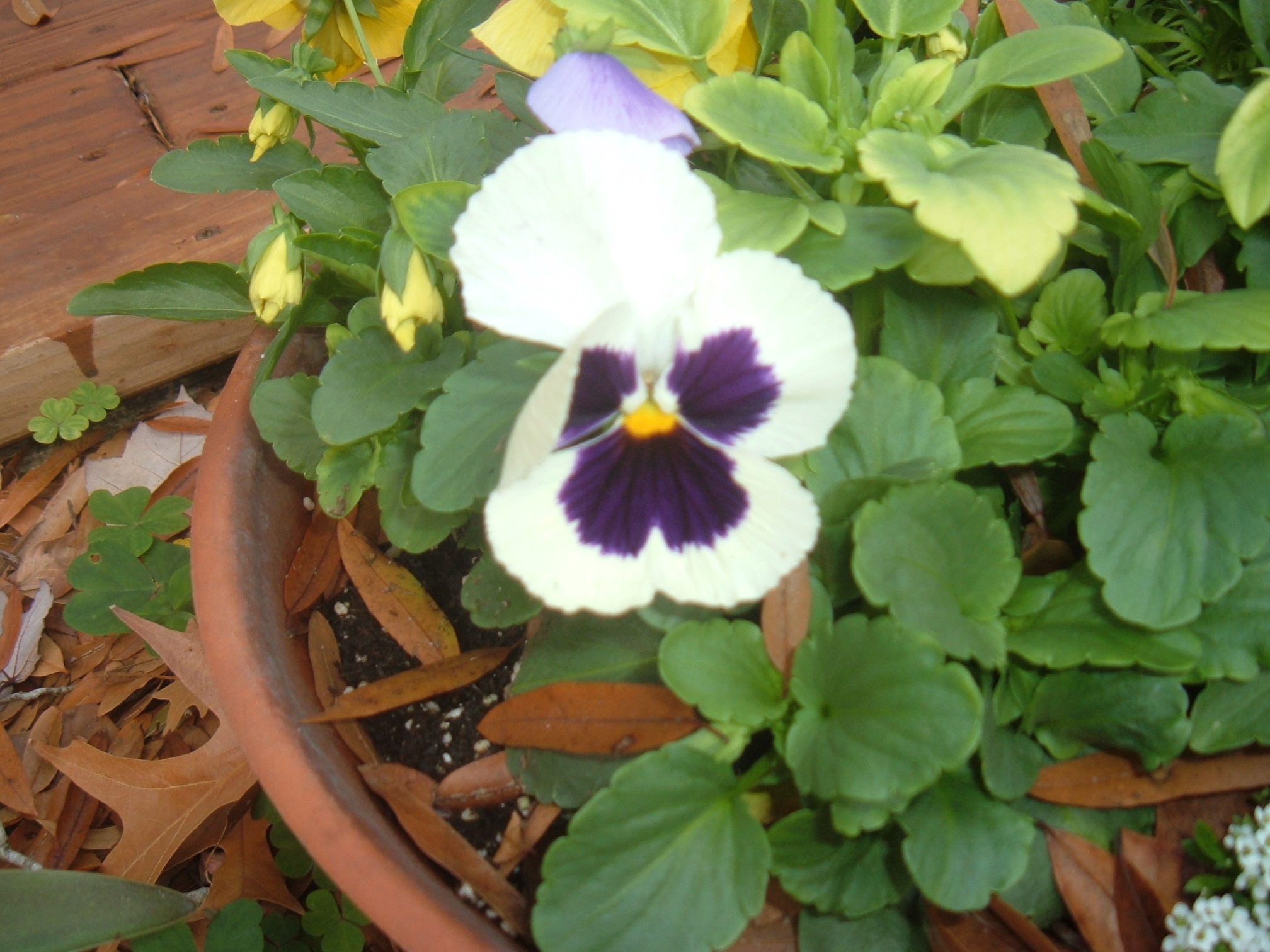
I know those smiley face pansies are calling your name, but ignore them until next month. It’s still too warm for these cool weather cuties.
If you have finished tilling the south forty, it’s ready for the planting of some veggies: spinach, turnips, radish, pumpkin (hurry), mustard, peas (English and snap), lettuce, beets and transplants of cabbage and broccoli.
Get the shovel out of the garage and knock off the dirt from last year’s dig. Fall is one of our best times for planting, even more so than spring – and here’s plenty of suggestions to get you going.